
Milestones
category
SHARE
When shopping for a motorcycle helmet, it’s common to come across technical codes and certifications that may look confusing at first. However, those markings are actually one of the most important aspects of any helmet: safety.
One term that is becoming increasingly common, especially with modular helmets, is the ECE 22.06 P/J homologation. But what does it actually mean? Why does it matter? And how is it different from older certifications?
What is ECE 22.06?
ECE 22.06 is the latest European safety regulation for motorcycle helmets. It gradually replaces the older ECE 22.05 standard and introduces significantly stricter testing requirements.
This certification ensures that a helmet has passed a wide range of safety tests required to be legally sold and used in Europe.
Some of the biggest improvements introduced with ECE 22.06 include:
- More impact test points
- Testing at different speeds
- Rotational impact testing
- Accessory testing (such as intercom systems)
- Stricter visor and retention system requirements
In short, ECE 22.06 is not just a minor update, it is a major step forward in motorcycle helmet safety.
What does “P/J” mean?
The term P/J is especially relevant for modular or flip-up helmets.
Modular helmets can receive different types of homologation:
- P → Protective: approved only as a full-face helmet
- J → Jet: approved only as an open-face helmet
- P/J → dual homologation for both open and closed positions
A helmet with P/J certification has been officially tested and approved to be legally ridden both with the chin bar closed and with it flipped open.
This is important because many riders use modular helmets open in urban environments without realizing that some helmets are not certified for use in that position.
Why P/J homologation matters
Dual homologation is not just about legality — it also reflects the helmet’s engineering and safety level.
To achieve P/J certification, manufacturers must prove that:
- The chin bar remains secure when opened
- The locking mechanism is reliable
- The helmet still offers sufficient protection in both configurations
This requires stronger locking systems and more robust structural design.
In practice, a P/J helmet usually offers:
- Greater versatility
- Legal use in both positions
- Better convenience for urban riding
- A stronger balance between comfort and protection
What to check before buying a modular helmet
Before purchasing a modular helmet, it’s important to verify:
- ECE 22.06 certification
- P/J homologation if you plan to ride with the helmet open
- Official certification labeling
- A strong chin bar locking mechanism
- Proper fit and comfort
Because beyond design, aerodynamics, or features, homologation is what truly confirms the helmet’s safety standards.
ZYON and ECE 22.06 integration
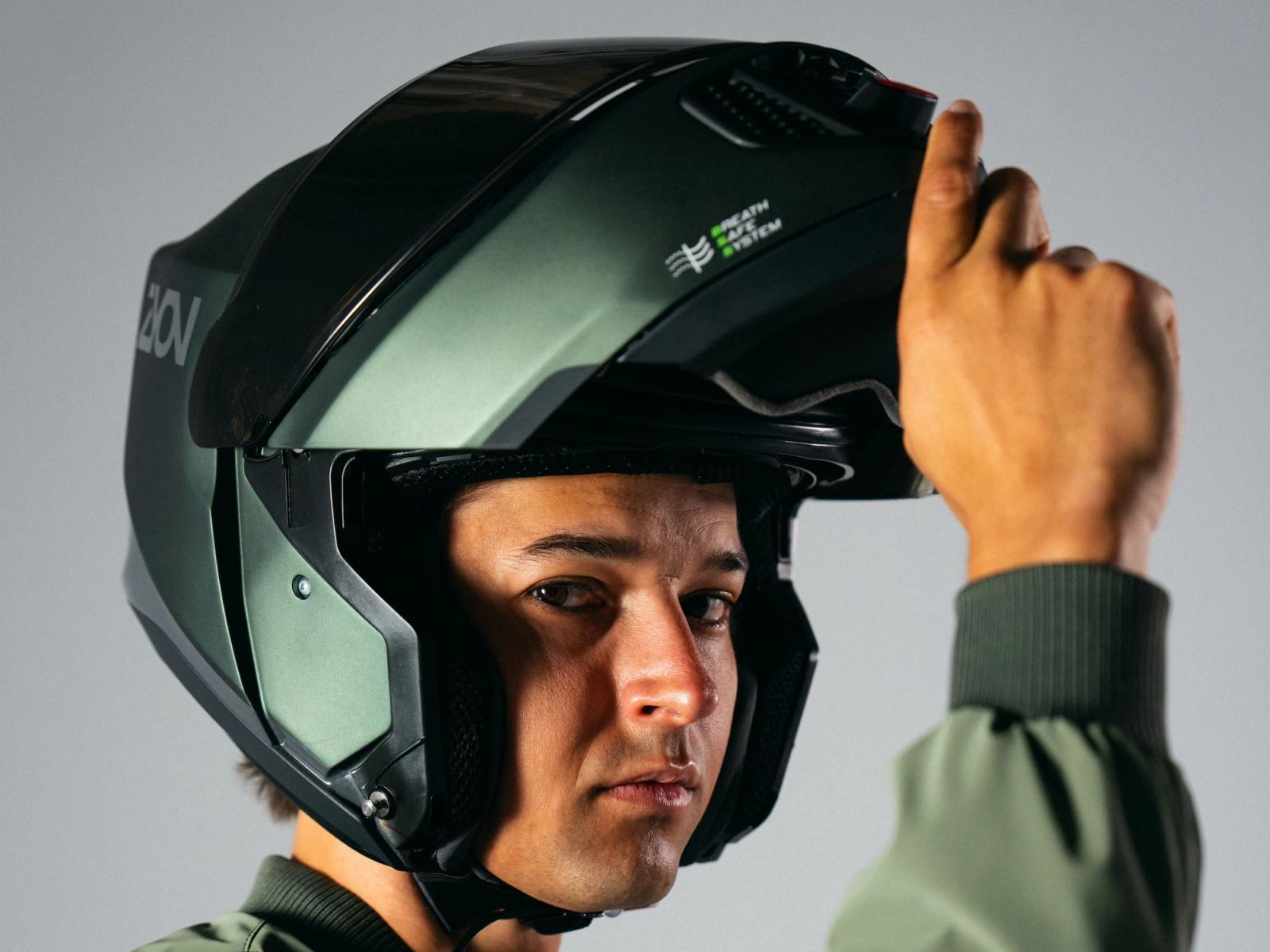
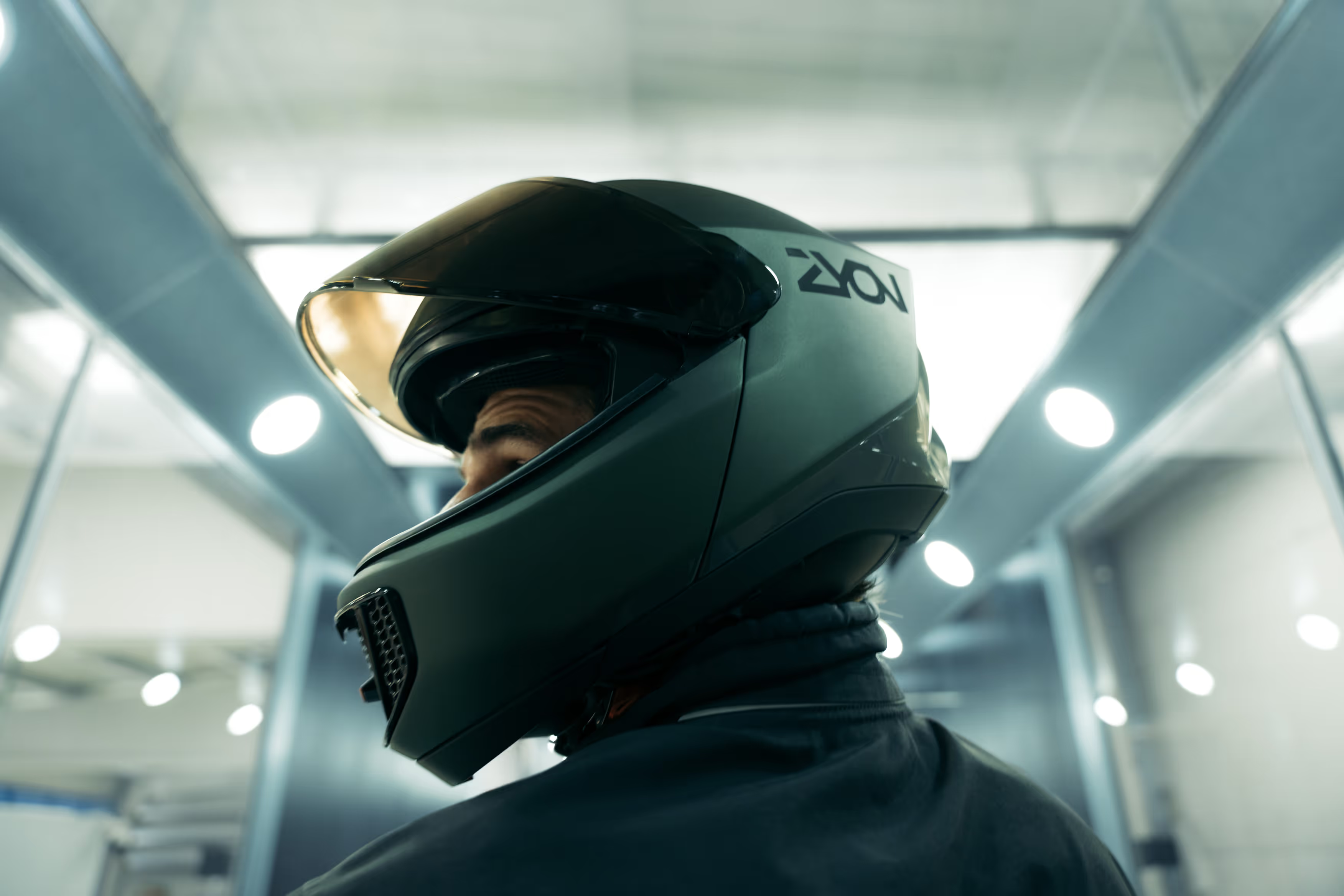
ZYON is developed with ECE 22.06 compliance as a core design requirement from the initial engineering phase.
The helmet is designed to meet ECE 22.06 standards and includes P/J homologation, ensuring validated performance in both full-face and open-face configurations.
This approach aligns the product directly with current European safety regulations, integrating certification requirements into the design process rather than adapting to them after development.



Coming mid 2027
ride safer
& healthier
FAQ
FREQUENTLY
ASKED QUESTIONS
1.0
How can I ensure I choose the right size?
2.0
Are colors and sizes final when I make a reservation?
3.0
Can I replace the filter myself?
4.0
Can I return my helmet?
5.0
Can I ride with the ZYON Helmet in an open-face setup?
6.0
Can I update my information after making the reservation?
7.0
Does the ZYON Helmet support emergency alerts or contact notifications?
8.0
Does the rear light work automatically?
9.0
Does the smart app require a subscription?
10.0
How do I charge the helmet?
11.0
How does air enter only through the Breath Safe System?
12.0
How often do I need to replace the air filter?
13.0
Is my selection of color and size final?
14.0
Is the reservation refundable?
15.0
Is the €20 deducted from the final price of the helmet?
16.0
What do I get by paying the €20 reservation?
17.0
When will I have to pay for the helmet?
18.0
When will the helmets be delivered?
19.0