
Milestones

category
SHARE
Road safety is the absolute priority for any motorcyclist, and the helmet is, without a doubt, the most critical component of our protective gear. However, there is a recurring question among the motorcycling community: do motorcycle helmets really expire? The short answer is yes, but the factors that determine that moment go far beyond a simple date printed on a label. In this article, we will explore the standard replacement criteria and how ZYON Helmets technology is changing the rules of the game through the use of smart chips.
Standard lifespan: How often should you replace your helmet?
Although there is no law that forces helmet replacement within a specific period, manufacturers and safety organizations like the DMV agree on a general recommendation: replace the helmet every 5 years. This period is not arbitrary; it is based on the natural degradation of the materials that make up the helmet, especially the EPS (expanded polystyrene), which is the internal layer responsible for absorbing impacts. Over time, this material loses its elasticity and cushioning capacity due to exposure to environmental factors and daily use.
Key factors to consider are:
Shell material:
•Thermoplastic resin helmets: It is recommended to change them approximately every 5 years, as they are more sensitive to degradation from UV rays and temperature changes.
•Fiberglass or carbon helmets: Their lifespan can extend up to 7 or 8 years, due to the greater stability of their materials, although the interior still degrades.
Intensive use: If you use the helmet very frequently, exposure to sweat, skin oils, and constant cleaning can accelerate wear, reducing its lifespan to 3 or 4 years.
It is essential to understand that sweat, hair products, and constant sun exposure act as corrosive agents for the internal components. Therefore, even if the helmet looks impeccable on the outside, its internal structure could be compromised after five years of road adventures.
The impact of blows: Why a single blow can be fatal
One of the golden rules in motorcycling is that a helmet that has suffered an impact must be replaced immediately. This is because the EPS is designed to collapse and absorb the energy of the blow only once. Once it has deformed, it does not return to its original shape, leaving that area of the helmet without effective protection against a second impact.
Even an accidental fall from the motorcycle seat to the ground can generate invisible micro-cracks in the outer shell or slightly compress the internal EPS. In many cases, the damage is not visible to the naked eye, which creates a false sense of security. Riding with a helmet that has received a blow is, in practice, riding without adequate protection.
ZYON Helmets: The technology that eliminates uncertainty
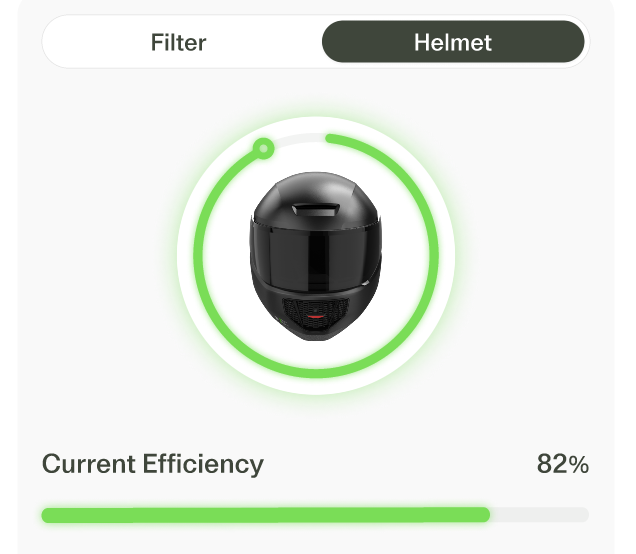
Until now, determining the actual condition of a helmet depended on the rider's memory or imprecise visual inspections. However, the arrival of the ZYON helmet marks a before and after in preventive safety. This helmet not only complies with the most demanding regulations such as ECE 22.06, but also integrates a smart chip that communicates directly with a mobile application.
The ZYON Chip & App system allows real-time monitoring of the helmet's condition, detecting impacts and wear that could compromise its protective capacity.
How does ZYON's smart chip work?
ZYON's innovation lies in its ability to collect objective data on the helmet's life. Through integrated sensors, the chip records critical information that the user can consult in the ZYON App:
1.Impact Monitoring: The chip detects if the helmet has received a significant blow. If the impact force exceeds safety thresholds, the application will notify the user that the structural integrity could be compromised and that a replacement is necessary.
2.Wear and Tear Tracking: The system analyzes the effective use time and the environmental conditions to which the helmet has been exposed, accurately calculating the level of degradation of the internal materials.
More than a helmet: Active safety and health
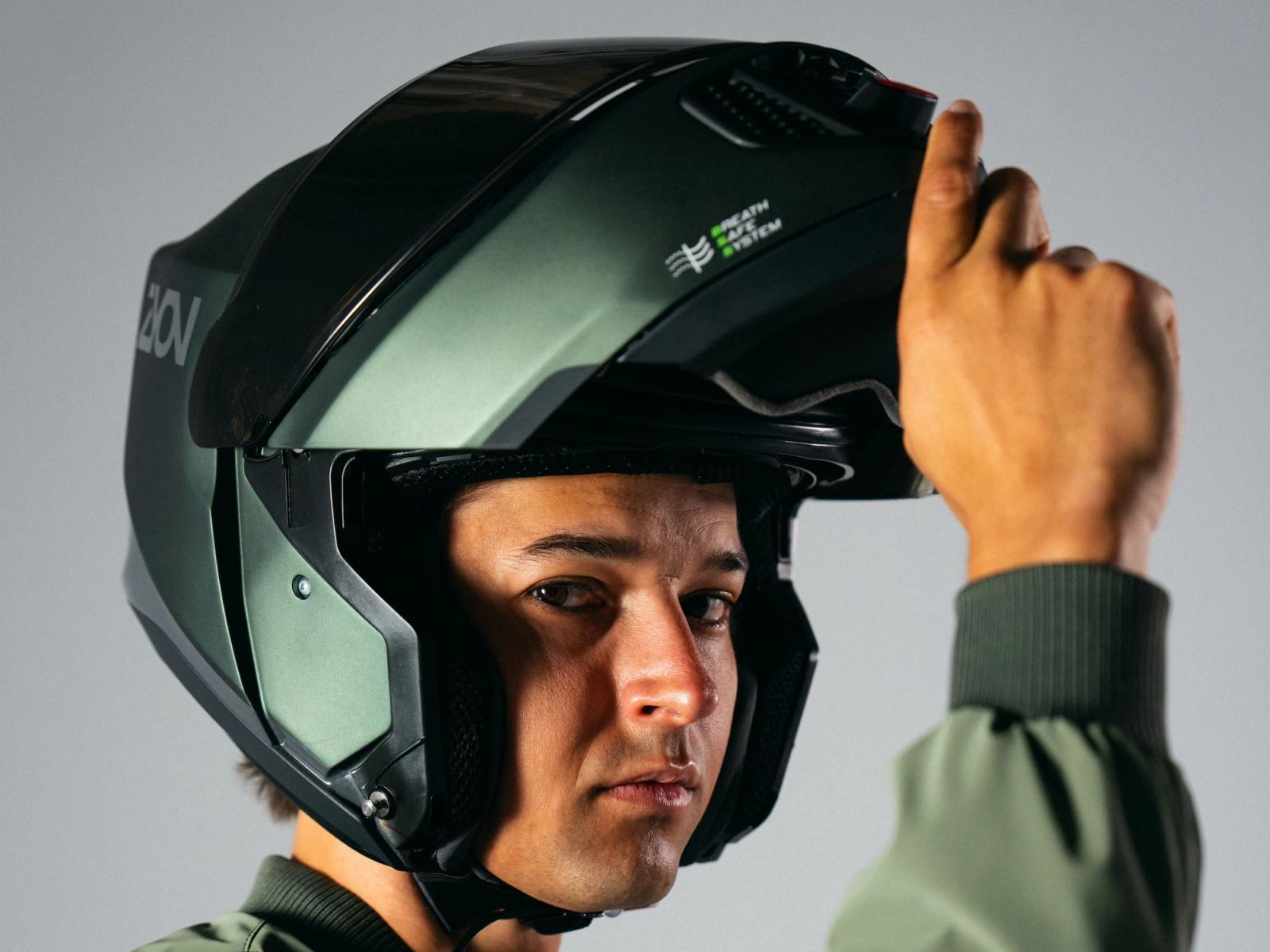
The ZYON helmet is not limited to protecting against impacts. Its comprehensive approach includes MIPS technology to reduce rotational forces in the event of an accident and an active rear light with a brake sensor that dramatically improves rider visibility. By combining traditional physical protection with data intelligence, ZYON offers the rider the peace of mind of knowing exactly when their equipment is in optimal condition and when it is time to renew it.



Coming mid 2027
ride safer
& healthier
FAQ
FREQUENTLY
ASKED QUESTIONS
1.0
How can I ensure I choose the right size?
2.0
Are colors and sizes final when I make a reservation?
3.0
Can I replace the filter myself?
4.0
Can I return my helmet?
5.0
Can I ride with the ZYON Helmet in an open-face setup?
6.0
Can I update my information after making the reservation?
7.0
Does the ZYON Helmet support emergency alerts or contact notifications?
8.0
Does the rear light work automatically?
9.0
Does the smart app require a subscription?
10.0
How do I charge the helmet?
11.0
How does air enter only through the Breath Safe System?
12.0
How often do I need to replace the air filter?
13.0
Is my selection of color and size final?
14.0
Is the reservation refundable?
15.0
Is the €20 deducted from the final price of the helmet?
16.0
What do I get by paying the €20 reservation?
17.0
When will I have to pay for the helmet?
18.0
When will the helmets be delivered?
19.0