
Milestones

category
SHARE
Every year, thousands of motorcyclists die in road accidents across Europe. A significant portion of those deaths is not caused by the impact itself, but by the time it takes for emergency services to arrive. An unconscious rider on a secondary road can take minutes or even hours to be found. Those minutes are, quite literally, the difference between life and death.
Automatic crash detection in motorcycle helmets is the technology that can change that reality. And in 2026, for the first time, there is a road helmet that includes it as standard.
What automatic crash detection in a helmet is
Automatic crash detection is a system that identifies, through sensors integrated into the helmet, that the rider has suffered an impact or a fall, and responds immediately without requiring any action from the user. The system detects the crash, evaluates the situation, and if it does not receive confirmation that the rider is safe, it automatically alerts emergency services and designated contacts.
It is not a feature connected to the motorcycle. It operates directly from the helmet itself, meaning it works independently of the vehicle and its condition after the accident.
How the system works in practice
The process happens in seconds and is completely automatic
- Impact detectionThe helmet’s sensors, accelerometers and gyroscopes, constantly monitor movement and acceleration. When they detect a pattern consistent with a fall or a severe impact, the system is triggered.
- Confirmation windowBefore taking action, the system gives the rider a few seconds to confirm they are safe. This helps avoid false alarms in situations like low-speed drops or minor impacts. If the rider confirms they are fine, the process is cancelled.
- Automatic alertIf there is no response, the system automatically sends an alert via the user’s mobile phone. This alert goes to emergency services and the rider’s pre-selected emergency contacts, including the exact GPS location of the accident.
Why this matters more than it seems
Emergency alert systems for vehicles have existed for years. eCall has been mandatory in all new cars sold in Europe since 2018. However, motorcycles have historically been left out of this level of protection. The reason is simple. In a car, the system is integrated into the vehicle’s structure. On a motorcycle, there is no equivalent structure where it can be installed in a standard way.
The helmet is the natural solution. It is the only element the rider always wears, it is in direct contact with the head, the most vulnerable part of the body, and it can integrate sensors without interfering with the riding experience.
The ZYON Chip, the first system integrated as standard in a road helmet
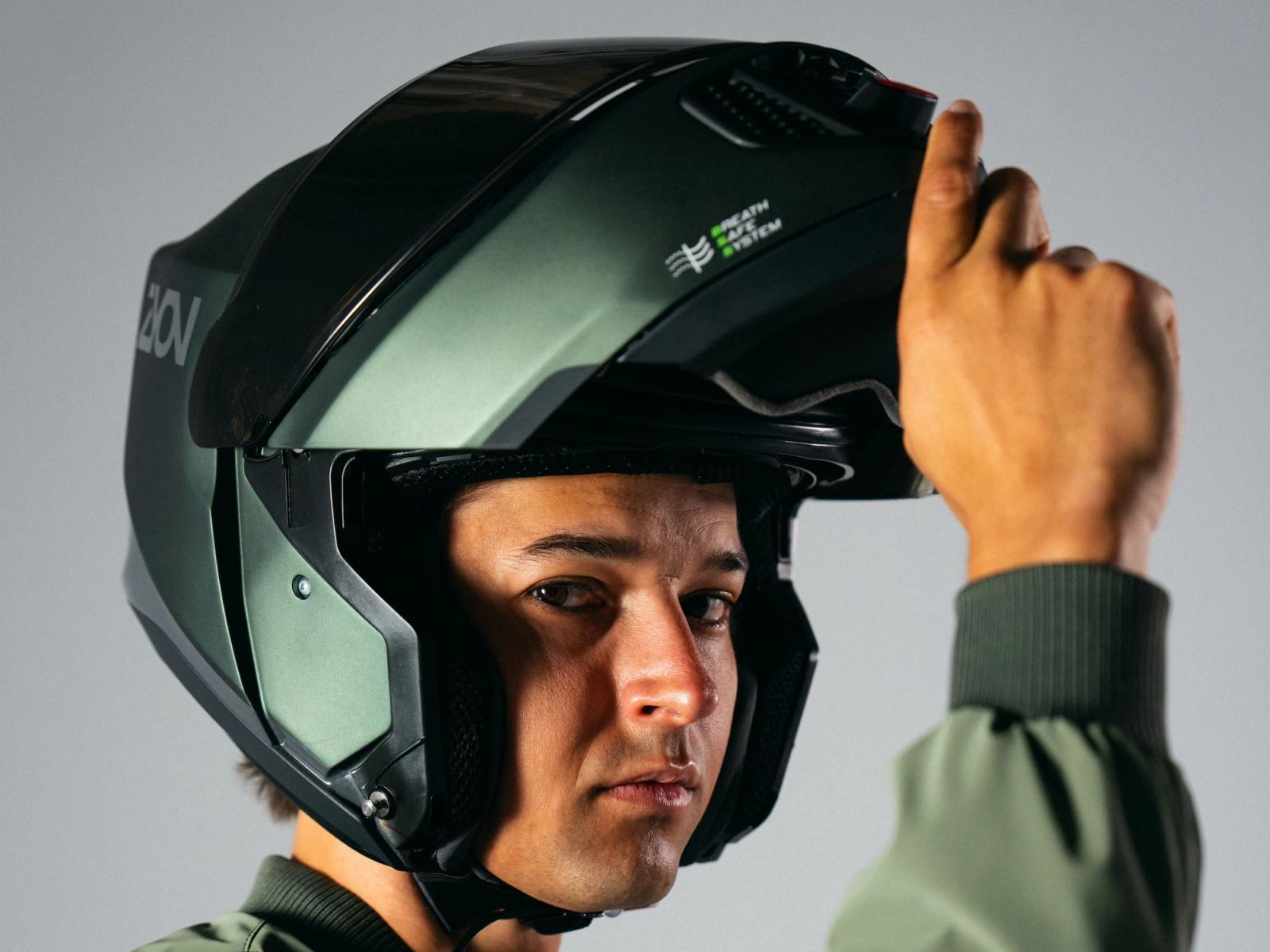
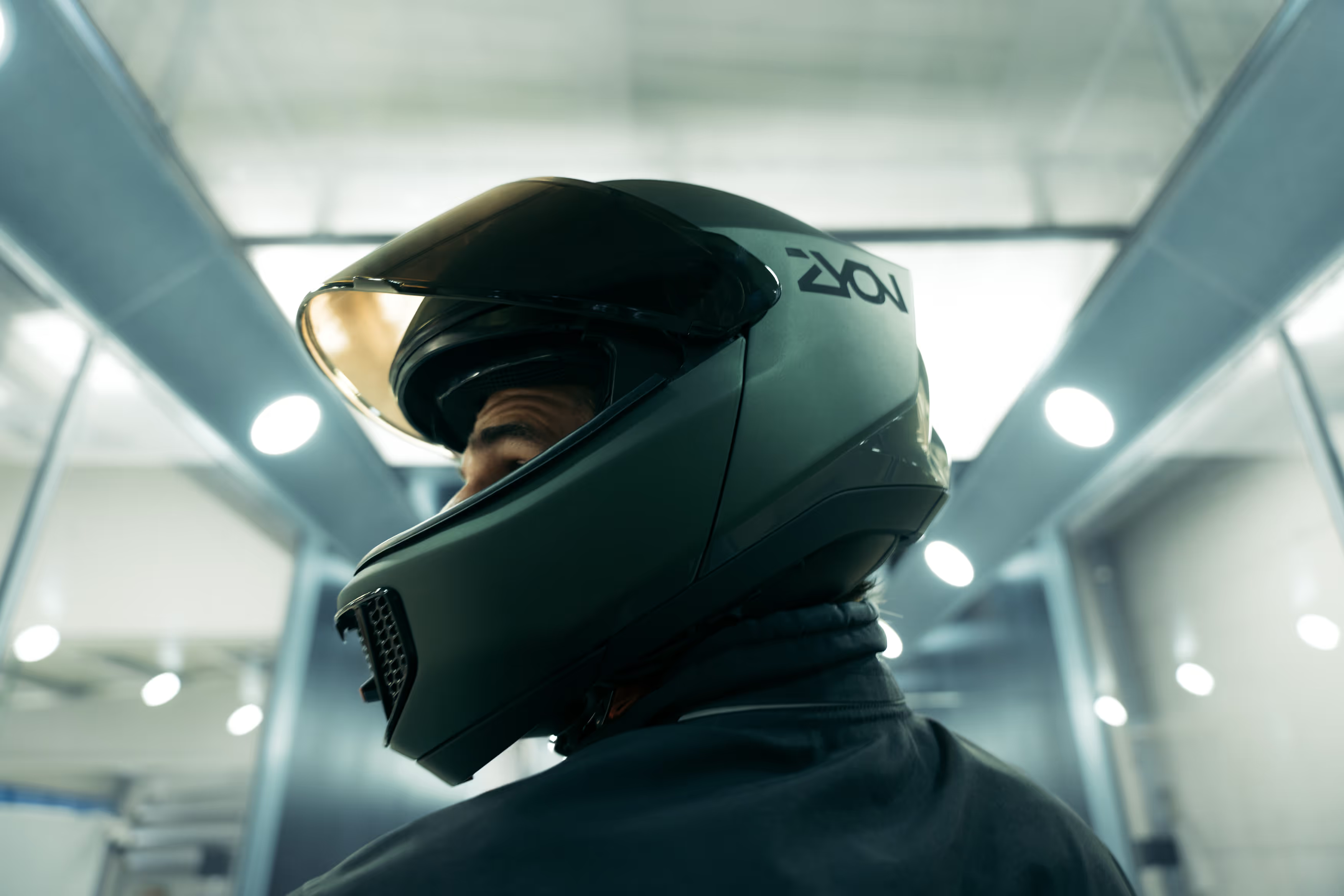
The ZYON Chip is the crash detection system integrated into the ZYON helmet, the first production road helmet on the market to include this technology as standard. It is not an optional accessory or an external add-on, it is part of the helmet’s architecture from the design stage.
Through the ZYON App, the rider configures emergency contacts and manages system preferences. In the event of an accident, the app acts as the link between the chip and emergency services, sending real-time location data.
The chip also continuously monitors other helmet parameters such as filter status, external air quality, and overall equipment condition, making ZYON one of the most connected road helmets on the market.
What differentiates an integrated system from existing alternatives
Before ZYON, riders who wanted similar protection had to rely on external solutions such as airbag vests with sensors, mobile apps for crash detection, or independent GPS devices. None of these options offer the reliability of a system specifically designed for the helmet, integrated from the beginning and calibrated to distinguish a real crash from normal riding movements.
The key difference is integration. A sensor in the helmet is in the optimal position to detect the most critical impact, the one affecting the head, with the lowest possible rate of false alarms.
Who should have this in their helmet?
The short answer is any rider. But there are profiles where the need is especially clear.
Riders who travel alone on secondary roads or mountain routes are the most vulnerable, as they are the ones who would take the longest to be found after an accident. Urban riders also benefit, where collisions with other vehicles are more frequent and rapid medical response is critical. And anyone who has ever thought, if something happens to me, how long would it take for someone to find me
Automatic crash detection in motorcycle helmets is not science fiction or a niche feature. It is a logical and necessary evolution of motorcycle safety, equivalent to what eCall represented for cars. In 2026, ZYON is the first road helmet to make it available as standard, without additional accessories and without complex setup.
If you are considering your next helmet, it is a question worth asking. Why does your helmet not call emergency services when you need it most?



Coming Q1 2027
ride safer
& healthier
FAQ
FREQUENTLY
ASKED QUESTIONS
1.0
How can I ensure I choose the right size?
2.0
Are colors and sizes final when I make a reservation?
3.0
Can I replace the filter myself?
4.0
Can I return my helmet?
5.0
Can I ride with the ZYON Helmet in an open-face setup?
6.0
Can I update my information after making the reservation?
7.0
Does the ZYON Helmet support emergency alerts or contact notifications?
8.0
Does the rear light work automatically?
9.0
Does the smart app require a subscription?
10.0
How do I charge the helmet?
11.0
How does air enter only through the Breath Safe System?
12.0
How often do I need to replace the air filter?
13.0
Is my selection of color and size final?
14.0
Is the reservation refundable?
15.0
Is the €20 deducted from the final price of the helmet?
16.0
What do I get by paying the €20 reservation?
17.0
When will I have to pay for the helmet?
18.0
When will the helmets be delivered?
19.0